Before the Table - Part 2: Paprika
Little Israel in Kailua
The first kitchen I remember that wasn’t home was in a restaurant called Paprika.
My mom, Iris, opened it in Hawaii when I was nine. My dad flew for Hawaiian Airlines. That’s how we ended up on Oahu.
The restaurant was in a strip mall in Kailua. Israeli food, Mediterranean food, the kind of cooking Iris had grown up with and knew how to make. Hummus. Falafel. Shawarma. Sabich, a dish with eggplant, hard-boiled egg, Jerusalem salad, and tahini, was one people came back for.
But the point was not just to open an Israeli restaurant. While teaching Hebrew at the University of Hawaii at Manoa, my mother had realized how limited that audience was: mostly young students, already inclined to be curious. She wanted to reach everybody else too. Parents. Grandparents. Locals. People who had never encountered Israeli culture except maybe as a word in the Bible. Paprika was her way of teaching through food.
None of it had a place there yet. People knew Jerusalem from scripture more readily than they knew Israel as a living, contemporary culture. So “Israeli salad” became “Jerusalem salad,” and suddenly people understood. Za’atar could be introduced as a biblical herb. Iris wasn’t diluting anything.
She was translating.
She sourced what she could from Los Angeles. The dough for the burekas came from L.A. The fillings were made in-house: spinach, eggplant, mushroom, broccoli, cauliflower when it was available. Always Bulgarian cheese, sometimes kashkaval, sometimes mozzarella, depending on what came in. The vegetables arrived fresh and were cooked the same day. If there was too much cabbage, there were stuffed cabbages as a special. Every day there was a soup du jour made from whatever was left. Nothing wasted.
The biggest hits on the menu weren’t the falafel or shawarma. They were the personal quiches and the burekas.
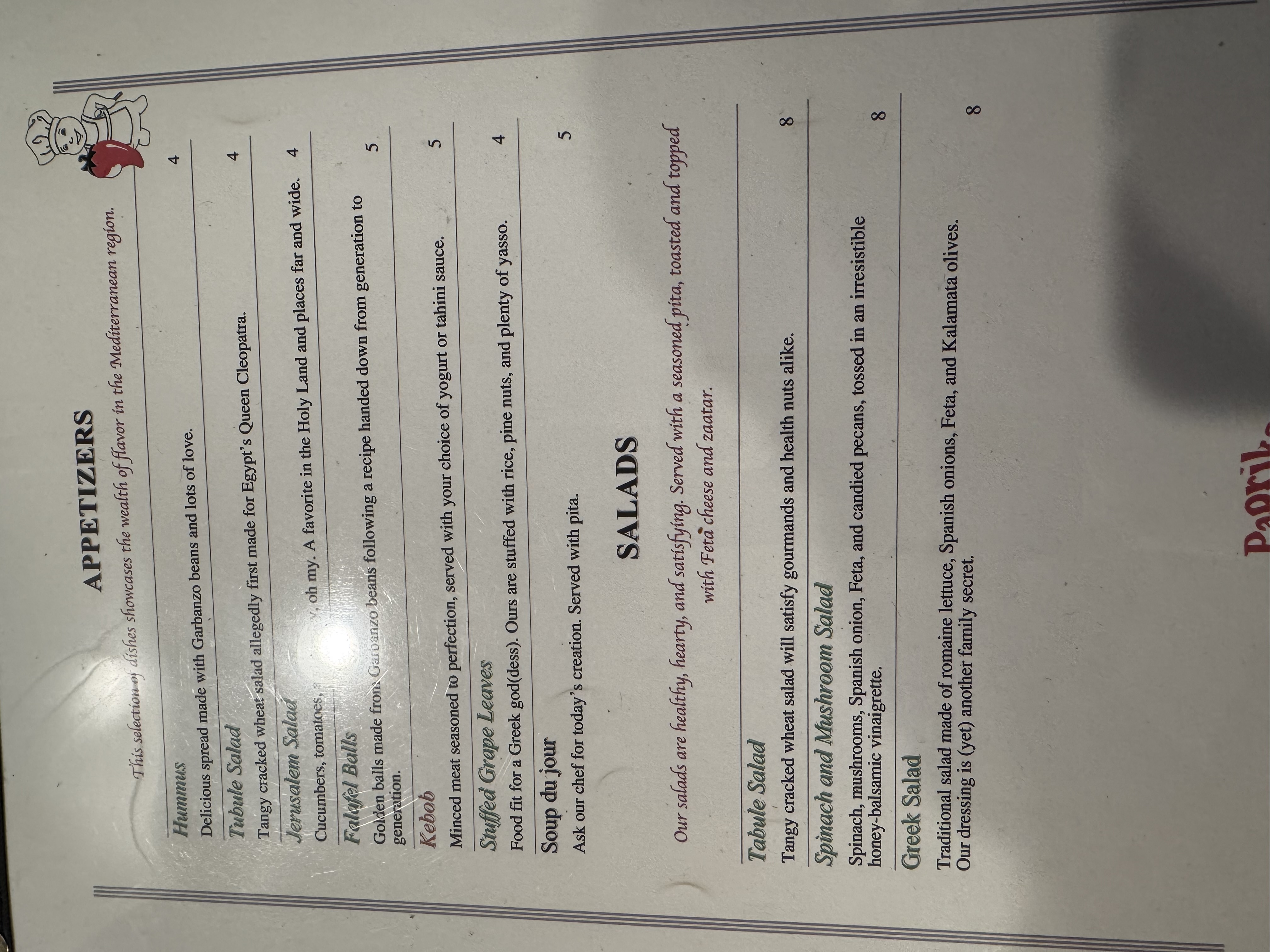
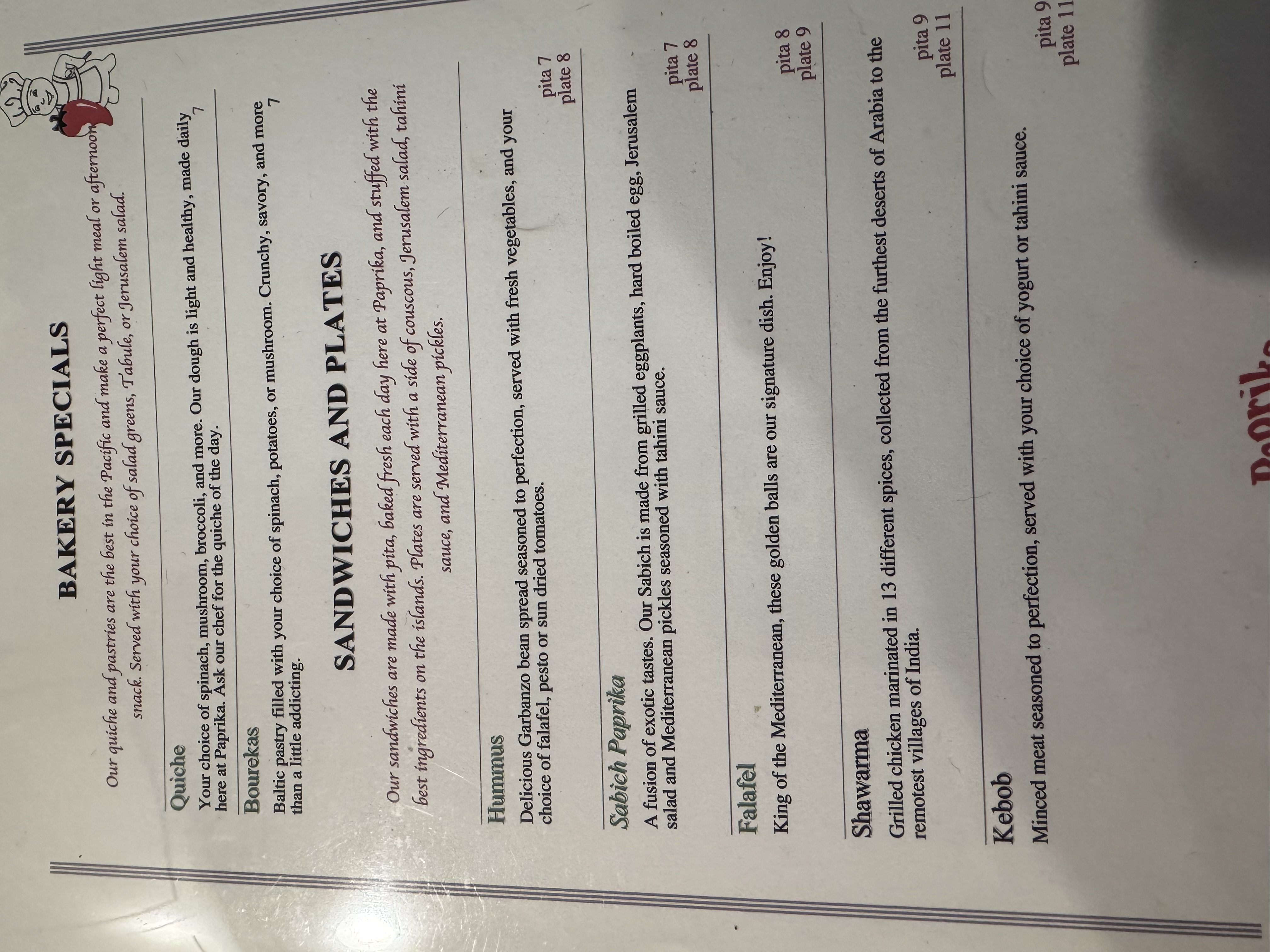
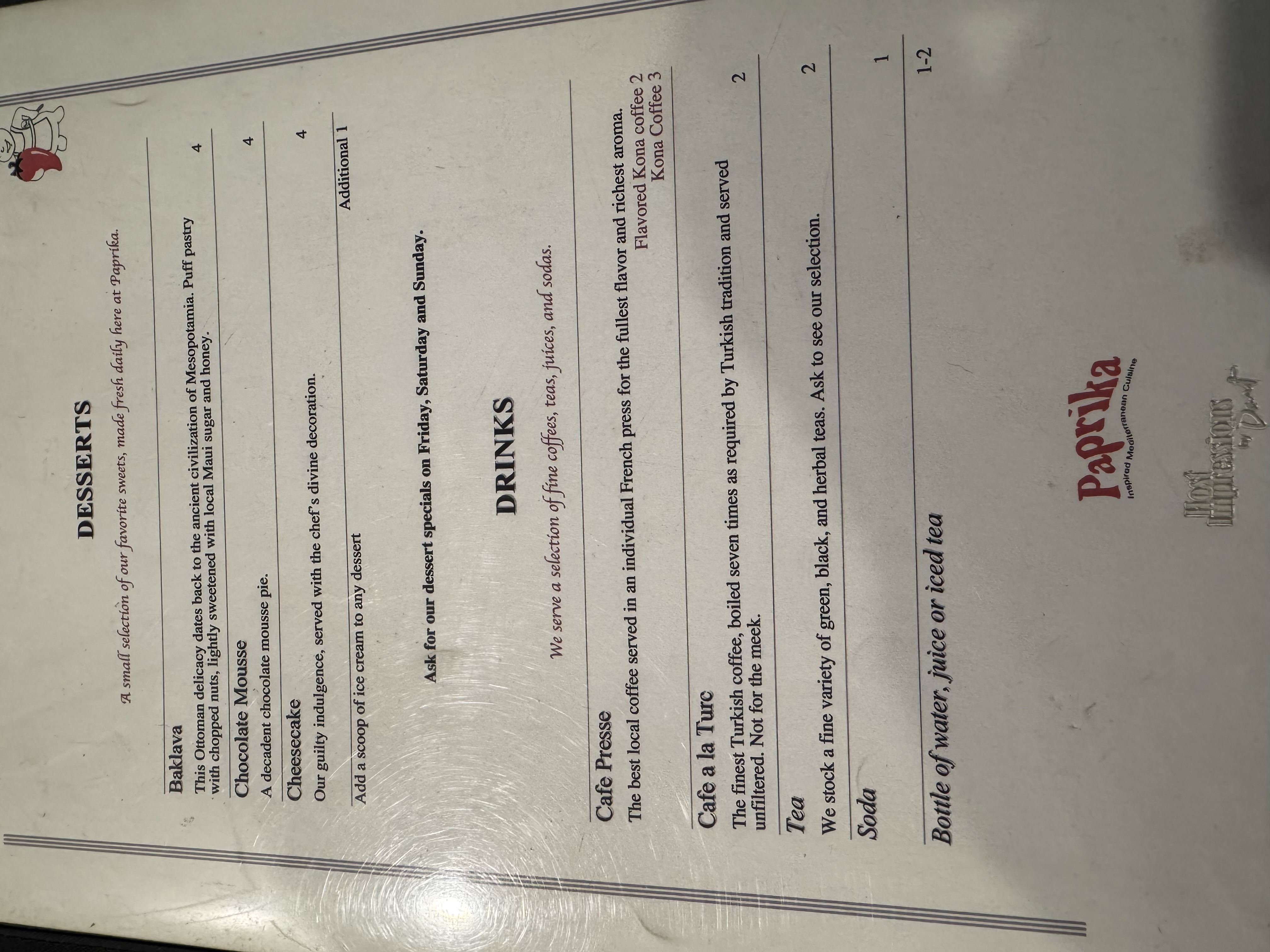
Paprika's menu - written by my brother, Erez
Paprika was staffed, in part, by young Israelis at Hawaii Pacific University, some studying to be chefs, others training in hospitality. They were not just employees. They were part of the atmosphere. People wanted to talk to them, ask where they were from, ask about kibbutzim and army service and food and family.
The restaurant was becoming what Iris wanted it to be: a living culture people could sit inside.
The local paper ran a piece on it.
“Little Israel.”
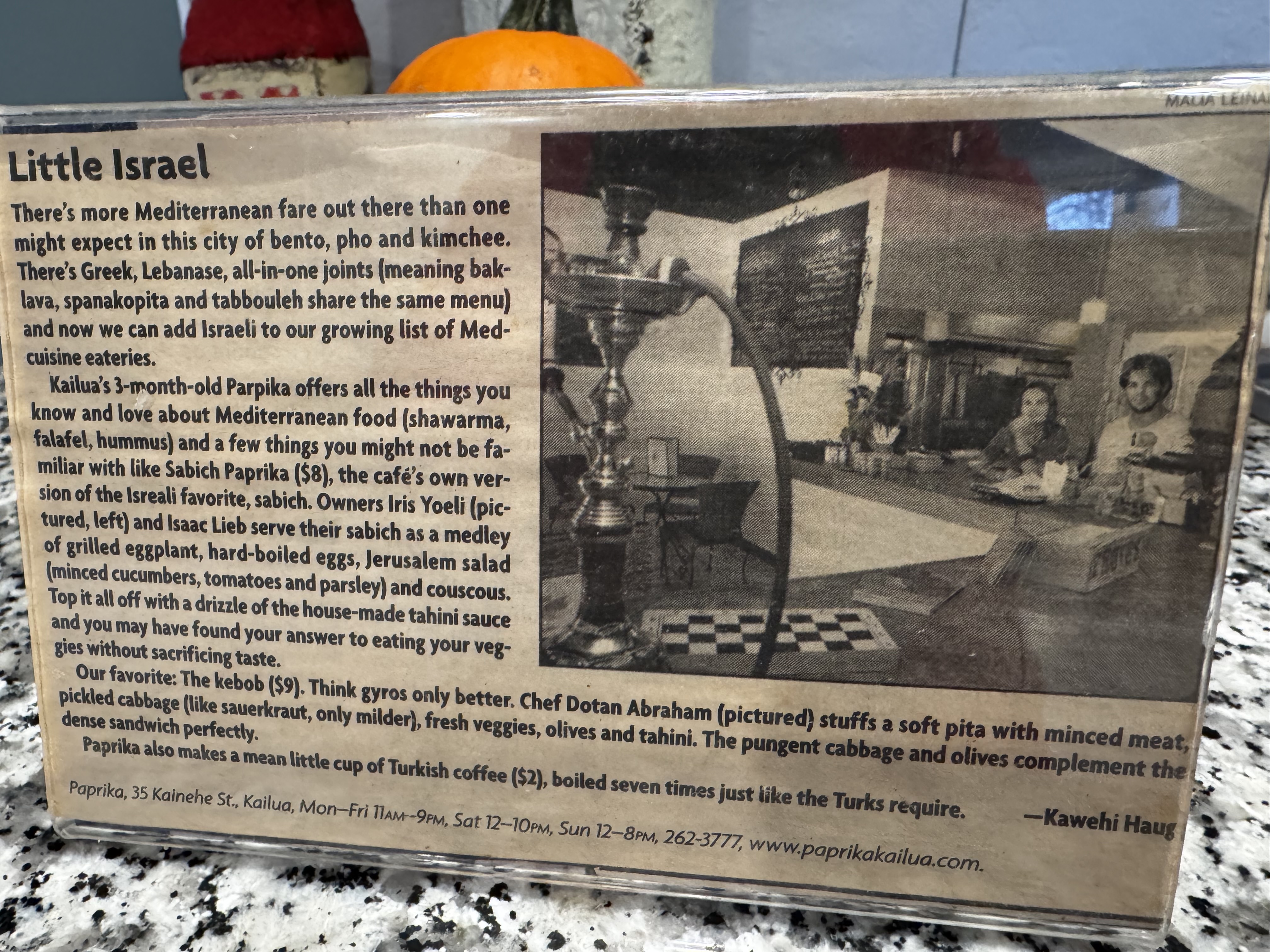
People came curious, and Iris went table to table telling stories. Her grandfather was from the Balkans. Her grandmother was from Istanbul. The eggplant quiche came from her mother, Ines. The cheesecake came from her sister, Debbie.
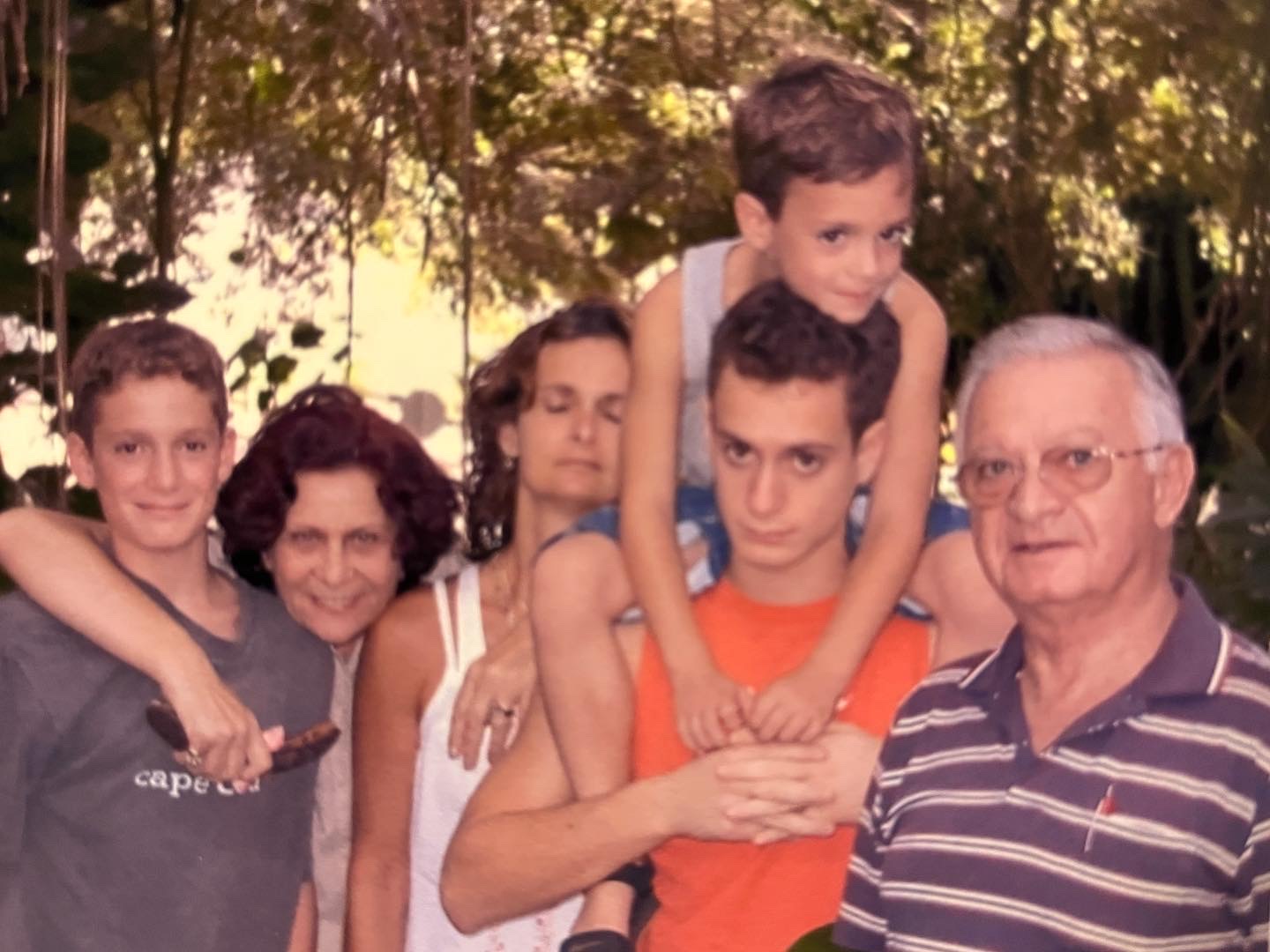
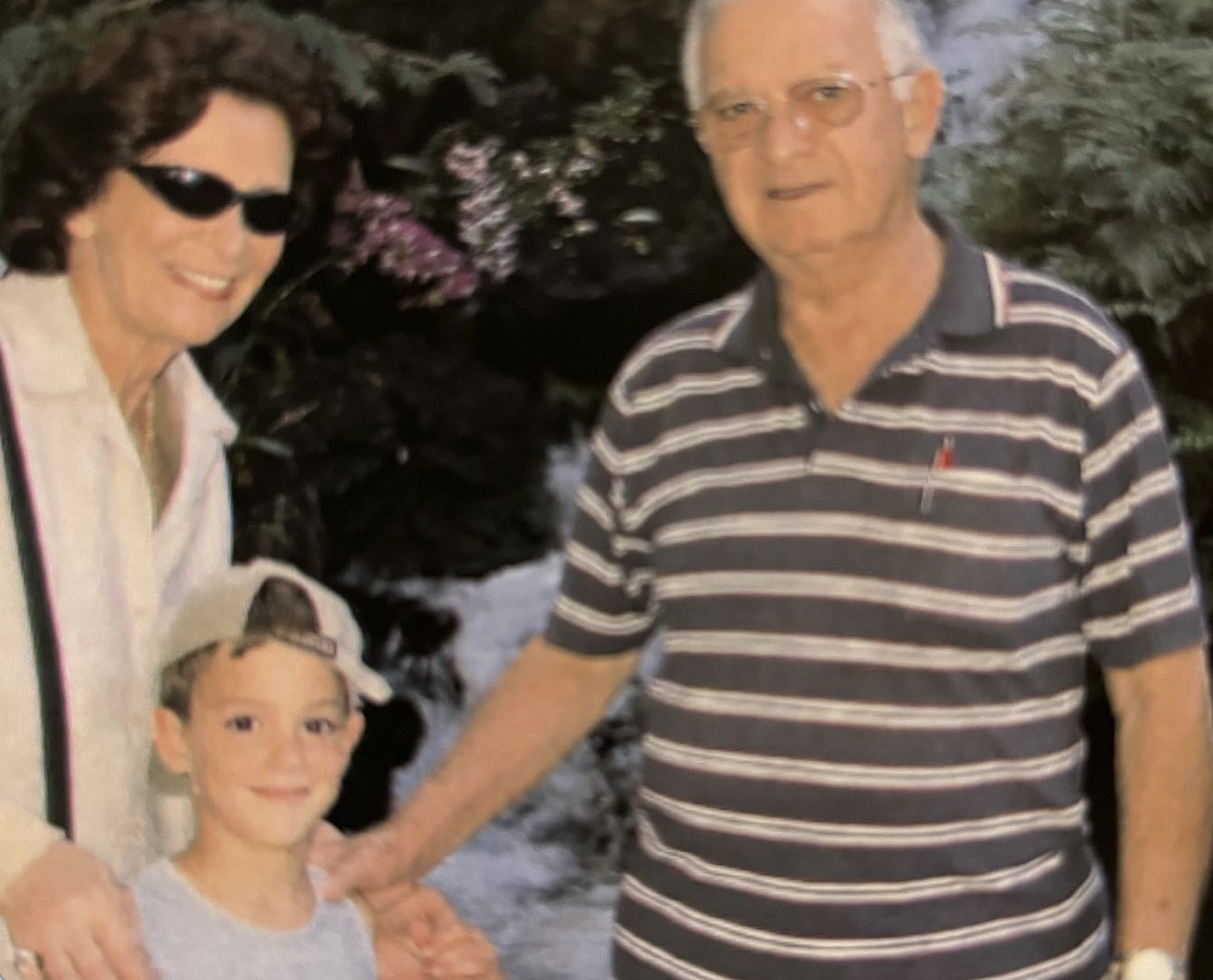
Ines and Oded on a family visit to Oahu, circa 2002
A woman who had only visited Oahu twice was somehow feeding people there through her daughter’s hands.
The strip mall let her put tables outside. There were movie nights, dance parties, Israeli folk dancing, belly dancing, evenings built around conversation as much as food. My mother’s Hebrew students came too, sometimes five, sometimes ten, sometimes fifteen at a time, making the whole thing younger and louder and more alive.
They screened films like Lemon Tree and Yossi & Jagger, not folklore, but conflict, intimacy, and contradiction.
Paprika was a family operation in the most literal sense. Oren, my middle brother, baked pita in the mornings before school. Every other pita on Oahu came bagged from the mainland. Paprika’s was fresh. He could tell by touch whether the dough was going to behave that day, whether the humidity had shifted, whether it would be a good pita day. He was always right.
I was nine. I bussed tables, made falafel on the line, and once got a fifty-dollar tip from a customer enchanted by the fact that I kept darting from table to table trying to help.
Vegans came for the falafel and hummus, not because it was marketed that way, just because it was.
Iris was surprised that people kept coming for the sabich and the eggplant quiche. People don’t like eggplant, she thought. Apparently they did when she made it.
But the burekas were what she made with the most love. Interesting cheeses, assembled one by one. Those were the ones people remembered.
Iris’s BurekasOne large bag of baby spinachOne medium onion1-2 eggs6 oz Kashkaval6 oz Bulgarian cheeseBlack pepperSesame seedsPuff Pastry Sheets
Deeply brown one onion.
Bring water to a boil. Put the spinach in a colander and pour the boiling water over it to wilt. Squeeze out the water and chop finely.
Combine the spinach, onion, grated kashkaval, crumbled Bulgarian cheese, black pepper, and eggs in a bowl.
Cut the pastry sheets into squares. Fill, brush edges with egg, fold into triangles and seal seams with a fork. Brush with egg and sprinkle with sesame seeds.
Bake until browned and the pastry is cooked through.
Paprika lasted about a year.
Iris ran it seven days a week. Later, she told me that was a mistake.
By then, several things were happening at once. My mother was in the long process of being considered for a position at the Defense Language Institute in Monterey, a job she had wanted for years. My family was making decisions about leaving Hawaii for my education. My parents’ marriage was beginning to come apart. The restaurant did not end for one simple reason. It was overtaken by the rest of our lives.
We left Hawaii. First Palo Alto, then Carmel.
But at home, wherever home was that year, Iris cooked.
Burekas, spinach and cheese, folded by hand, pressed at the edges. Majadra with fried onions. Schnitzel. Tahini. Pickled vegetables. Matzah brie, done flat and savory, more like a Spanish tortilla than anything from a brunch menu.
She is Ines’s daughter. She built her own kitchen, and then built it again in every place we moved through.
I didn’t talk about it with her. I absorbed it.
The burekas are on the menu at every Berkeley Supper Club dinner. Everybody always wants more.
The form is hers. Interesting cheeses, homemade filling, each pastry made by hand.
At the supper club the filling changes every time: white bean and fava, eggplant and potato, sweet potato, whatever the season allows. When Iris visits, we make hers together, spinach and cheese, the original. That’s the only version I don’t vary.
Some things you keep exactly as they were given to you.
Recipes from Paprika and home
Here are some recipes for some more of my childhood favorites.
Majadra1 cup green or brown lentils1 cup long-grain or basmati rice2 large onionsOlive oil1 tsp cumin1/2 tsp cinnamonSalt2 1/2 cups water or light vegetable broth
Simmer the lentils in salted water until al dente.
Thinly slice the onions and fry them in olive oil, low and slow, until deeply golden and crisp. Remove half the onions for topping. Add cumin and cinnamon to the pan with the remaining onions.
Add the rice and stir to coat. Add the lentils and enough reserved water or stock to cover by about an inch.
Cover and cook over low heat until the rice is tender and the liquid is gone.
Fluff and top with the reserved onions.
Matziah, my passover morning ritual:
MatziahFor a 6-8 inch pan: 3 eggs, 2 sheets matzahFor a 10-12 inch pan: 4 eggs, 3 sheets matzahSmall pinch of saltOptional: a little cheese, black pepper, scallions, caramelized onions, whatever1 tbsp butter
Beat the eggs with a small pinch of salt. Break the matzah into the eggs and mix until every piece is coated. If using, add your optional additions
Melt the butter in a pan over medium heat. Pour the mixture into the pan and spread evenly to the edges.
Cook until just set underneath. Fold in half.
Let the bottom get golden, then flip and let the other side get golden.
Serve immediately.
Iris’s chocolate mousse was also on the menu at Paprika. I was obsessed with it. I still am. The key was to use Shokolad Para, the Israeli cow chocolate, whipped cream, tea biscuit crust. That was it.
Chocolate Mousse Pie3 bars Shokolad Para1 1/2 cups heavy cream1 tea biscuit or graham cracker crust
Break the chocolate into pieces and melt gently. Let it cool slightly.
Whip the heavy cream to stiff peaks. Fold the whipped cream into the chocolate in two to three additions.
Pour into the crust and smooth the top. Refrigerate for at least 4 hours, preferably overnight.
Serve cold with a scoop of vanilla ice cream.
-Alon